
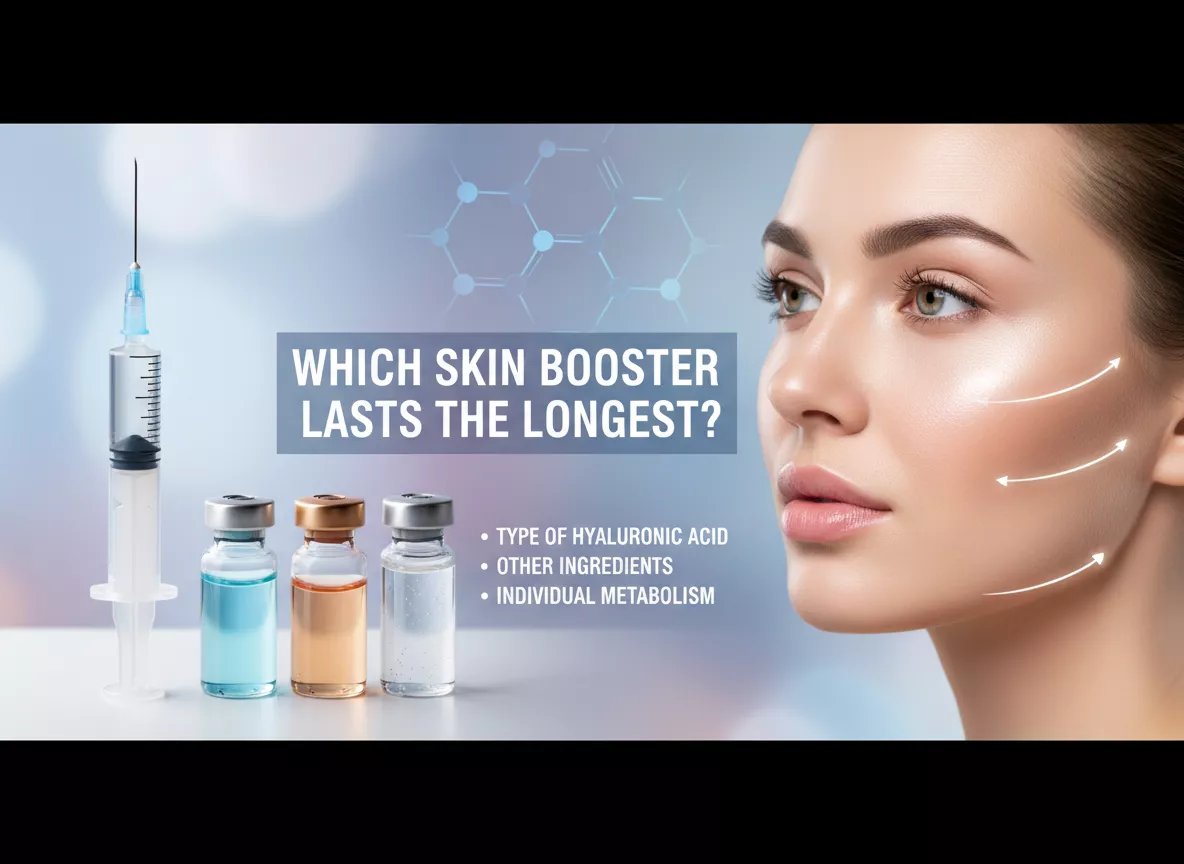
Which Skin Booster Lasts the Longest?
Among the skin boosters most commonly used in UK clinics, polynucleotides generally hold results the longest, commonly six to nine months, compared with around six months for HA-based options like Profhilo and Seventy Hyal. Longevity still depends on the individual, the treatment area, and how consistently the course was completed.
How Long Does Profhilo Last?
Profhilo results typically last around six months before a top-up session is recommended, a figure that’s consistent across UK clinic protocols and the product’s own manufacturer guidance. Results build over the first six to eight weeks after the second session, then gradually fade as the hyaluronic acid is metabolised.
Maintenance sessions are usually scheduled roughly every six months to sustain results, rather than waiting for the effect to disappear completely and restarting the full two-session course from scratch.
How Long Does Seventy Hyal Last?
Seventy Hyal, an HA-based skin booster, follows a similar longevity pattern to Profhilo, with most clinics quoting results lasting around six months. As a next-generation HA skin booster, it’s formulated to deliver an intense hydration boost that peaks within the first few weeks of treatment.
Like other HA skin boosters, Seventy Hyal’s effect fades gradually as the product is broken down by the body, rather than dropping off suddenly, which is why most maintenance plans schedule a repeat session before results have fully faded.
How Long Do Polynucleotides Last?
Polynucleotides commonly outlast HA skin boosters, with many UK clinics quoting results of six to nine months for brands like Vitaran and Plinest. That extra longevity reflects the underlying mechanism: PN stimulates the skin’s own ongoing collagen production rather than relying on a reservoir of product that simply depletes.
As with any polynucleotide treatment, longevity is closely tied to completing the full course, typically two to three sessions spaced two to four weeks apart, rather than judging results after a single visit.
Which Skin Booster Provides the Longest-Lasting Hydration?
If hydration specifically, rather than overall skin quality, is the priority, HA skin boosters like Profhilo and Seventy Hyal deliver a faster and more immediately noticeable hydration boost, even if the underlying product doesn’t last quite as long as a polynucleotide course.
Polynucleotides do improve hydration over time as tissue quality rebuilds, and that improvement tends to persist for longer once established. The trade-off is speed versus durability: HA hydrates faster, PN holds its improvement longer.
What Affects the Longevity of Skin Boosters?
Individual metabolism plays a significant role, since hyaluronic acid and polynucleotides are both broken down by the body’s normal enzymatic processes, and that rate varies from person to person. Lifestyle factors including sun exposure, smoking and hydration levels also influence how long results stay visible.
- Treatment area: thinner, more mobile skin (like under the eyes) tends to fade sooner than the cheeks
- Skin condition at baseline: more photodamaged or lax skin may need more frequent maintenance
- Course completion: skipping sessions in a recommended course shortens how long the overall result holds
- Age: faster natural turnover in younger clients can mean products metabolise slightly quicker
Does Age Affect Skin Booster Longevity?
Yes, to some degree. Younger clients with faster cellular turnover may metabolise both HA and polynucleotide products slightly faster, while more mature skin, which often has fewer active fibroblasts to respond to a polynucleotide signal, may see results build more slowly but hold reasonably well once established.
This isn’t a reason to choose one treatment over another based on age alone. It’s a reason to set realistic expectations at consultation and plan maintenance timing around the individual client’s response rather than a generic timeline.
Which Skin Booster Is Best for Mature Skin?
For mature skin with visible laxity and photodamage, polynucleotides are generally the better starting point, since they address the underlying collagen loss directly rather than layering hydration onto already-thinning tissue.
Profhilo and Seventy Hyal still have a valuable role for mature clients whose primary concern is dehydration and dullness, and many clinics combine both categories, PN for structural rebuilding, HA for maintenance hydration, in an ongoing plan.
How Is Longevity Actually Measured?
Most of the longevity figures quoted for skin boosters come from a mix of manufacturer follow-up studies and real-world clinic observation, tracking how long a visible improvement in hydration, elasticity or texture holds before a client’s skin returns to its pre-treatment baseline. That’s a slightly different measure from asking how long the injected substance itself physically remains in the tissue.
This distinction matters because it explains why polynucleotides can outlast their HA counterparts despite metabolising from the tissue at a broadly similar rate. The visible result from PN depends on newly built collagen and elastin, which the body maintains for a while after the original DNA fragments themselves have been cleared, extending the practical lifespan of the treatment beyond the product’s own presence in the skin.
Frequently Asked Questions
These are the specific longevity questions clients and clinics ask most often when comparing skin boosters.
How long does Profhilo last?
Around six months, with maintenance sessions typically scheduled at that interval.
How long does Seventy Hyal last?
Also around six months, following a similar hydration and fade pattern to Profhilo.
How long do polynucleotides last?
Commonly six to nine months, slightly longer than most HA-based skin boosters.
Which skin booster provides the longest-lasting hydration?
Polynucleotides tend to hold their improvement longest overall, though HA skin boosters hydrate faster initially.
How often should skin boosters be repeated?
Roughly every six months for HA-based products, six to nine months for polynucleotides.
Does age affect skin booster longevity?
Yes, to a degree, through differences in cellular turnover and baseline skin condition.
Does the treatment area affect how long a skin booster lasts?
Yes, thinner, more mobile areas like under the eyes tend to show fading sooner than the cheeks.
Which skin booster is best for mature skin?
Polynucleotides, generally, for their direct effect on collagen loss.




One comment
Pingback:
Buy Skin Boosters UK: 5 Essential Tips for Clinics (2026) - Trusted Medicare