How to Choose the Right Dermal Filler for Different Facial Treatment Areas
Selecting the appropriate dermal filler is a critical skill for UK aesthetic practitioners aiming to deliver natural looking results while prioritising safety and patient satisfaction. In 2026 the emphasis remains on personalised treatment planning based on anatomical needs rheological properties and evidence based product characteristics.
Why Dermal Filler Selection Matters
Proper filler choice directly influences treatment outcomes longevity complication rates and overall patient experience. Mismatched products can lead to unnatural contours migration Tyndall effect or premature loss of effect. Conversely evidence based selection supports structural support natural movement and longer term tissue improvement. Recent rheological studies and longevity data underscore that understanding product behaviour in specific facial zones is essential for consistent high quality results.
Key Factors to Consider Before Choosing a Dermal Filler
Successful selection involves multiple interrelated considerations tailored to each patient and treatment zone.
Treatment area
Facial zones differ significantly in skin thickness vascularity mobility and mechanical stress. Lips require flexibility while cheeks and jawline demand robust structural support. Nasolabial folds and tear troughs present unique challenges due to thin overlying skin and proximity to critical vessels.
Desired aesthetic outcome
Practitioners must clarify whether the goal is volume restoration contour definition hydration improvement or lift. Structural augmentation benefits from firmer products whereas subtle blending in dynamic areas favours softer more integrative gels.
Product viscosity
Viscosity measures resistance to flow. Higher viscosity fillers maintain shape better in deeper planes while lower viscosity options spread more easily and suit superficial or delicate regions. Matching viscosity to the injection plane helps achieve precise placement without unwanted diffusion.
Elasticity (G prime)
G prime quantifies the elastic stiffness of the filler. Higher G prime products resist deformation under stress making them ideal for projection and support in load bearing areas such as the cheeks chin and jawline. Lower G prime fillers offer greater flexibility for mobile zones.
Cohesivity
Cohesivity describes how well the gel maintains integrity rather than fragmenting. High cohesivity supports natural tissue integration and shape retention while appropriate levels prevent migration in dynamic facial regions.
Injection depth
Depth determines product selection. Supraperiosteal or deep subcutaneous placement suits firmer higher G prime fillers for structural work. Mid to superficial dermal placement requires softer lower viscosity options to avoid visible irregularities.
Patient assessment and treatment planning
Comprehensive evaluation includes skin quality thickness elasticity age medical history previous treatments and realistic expectations. Combination approaches with different fillers or complementary modalities often yield superior outcomes when planned thoughtfully.
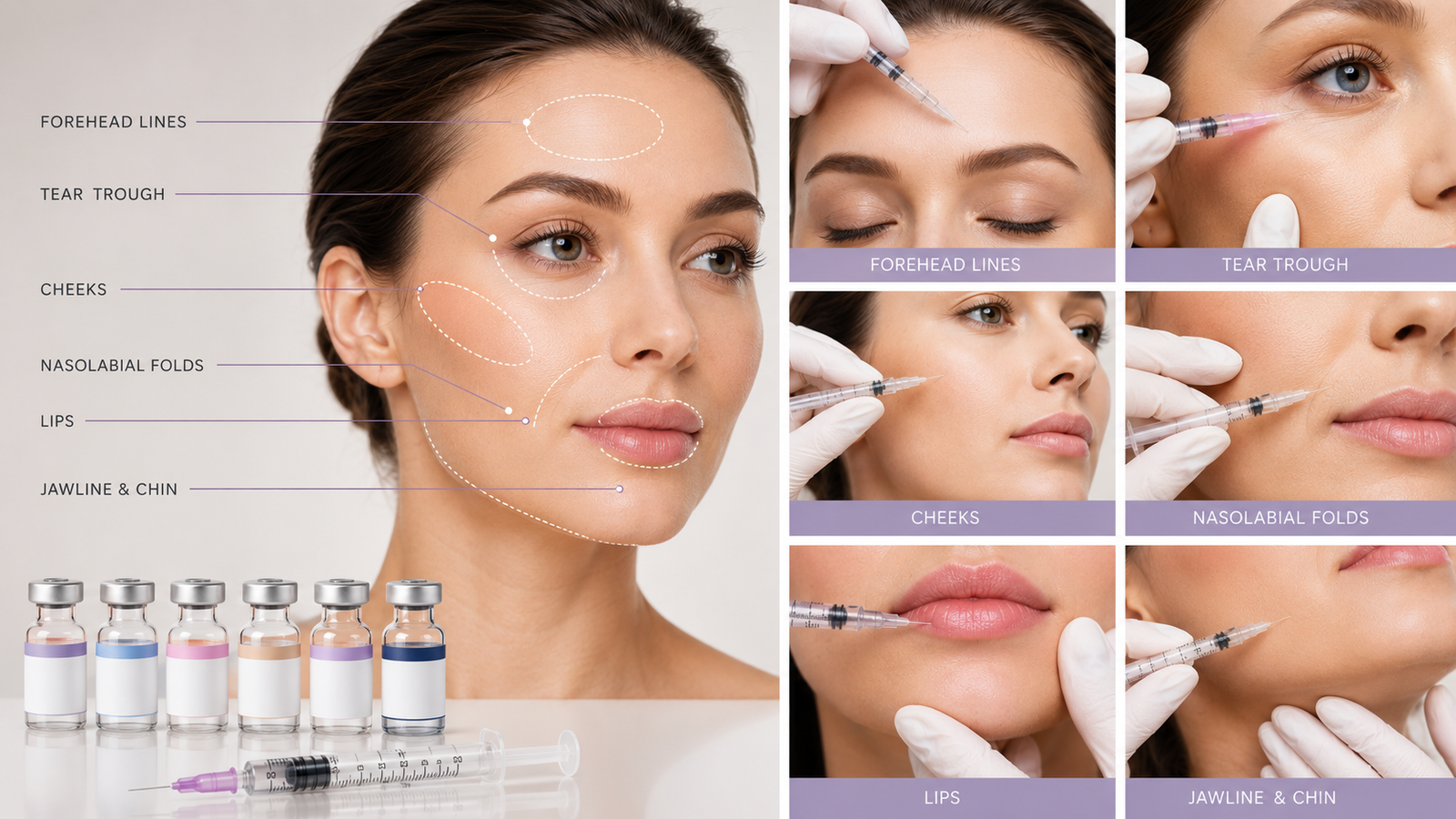
Choosing Dermal Fillers by Treatment Area
Anatomical considerations and rheological matching guide product selection for each common indication.
Lip Enhancement
Lips demand fillers with excellent soft integration flexibility and compatibility with natural movement. Lower viscosity cohesive hyaluronic acid products integrate smoothly without creating firmness or lumps allowing for natural animation and hydration. Common filler characteristics include moderate G prime and high cohesivity to respect lip dynamics while providing volume and definition.
Cheek Augmentation
Cheek treatment typically requires structural support projection and lift. Higher G prime crosslinked products placed in deep fat compartments or on periosteum restore midface volume and provide foundation for overlying tissues. Recent comparative rheological analyses help practitioners select products that resist deformation in this high mobility zone.
Jawline Contouring
Jawline definition benefits from high projection firm support and shape definition. Firmer higher viscosity and higher G prime fillers create sharp angles and improve lower face harmony. These products must withstand muscular forces while blending seamlessly with surrounding tissues.
Chin Enhancement
Chin treatments focus on projection balance and structural reinforcement. High G prime cohesive fillers placed deeply provide anterior projection and improve profile harmony. Selection emphasises products capable of maintaining shape in a relatively static but load bearing area.
Tear Trough Treatment
The tear trough is a delicate high risk zone requiring low swelling potential soft integration and careful product selection. Low viscosity highly cohesive hyaluronic acid fillers with low G prime minimise the risk of Tyndall effect or irregularities when placed conservatively in the appropriate plane.
Nasolabial Folds
Nasolabial fold correction often involves mid face support and volume replacement. Medium to higher G prime products placed at appropriate depth address volume loss while supporting surrounding structures. Product characteristics should balance lift with natural integration to avoid an overfilled appearance. UK practitioners frequently select well studied options suited to deeper placement for optimal longevity in this area.
Marionette Lines
Marionette lines treatment contributes to lower face rejuvenation. Product selection considerations include volume restoration in the prejowl sulcus combined with direct line filling using cohesive fillers that respect dynamic movement and avoid heaviness in the lower face.
Popular Dermal Filler Brands for Different Clinical Indications
UK clinics rely on established brands with distinct technological advantages.
Juvederm
The Juvederm portfolio utilises advanced crosslinking technology offering smooth integration and good longevity across indications. Specific formulations are optimised for lips cheeks and structural work.
Restylane
Restylane products provide a range of rheological profiles from flexible lip fillers to firmer structural options. The technology supports natural tissue behaviour in dynamic areas.
Teosyal
Teosyal fillers are valued for purity and resilience. The range includes options tailored to volume restoration and dynamic zones.
Stylage
Stylage incorporates additional components for antioxidant effects and offers versatile crosslinking levels suitable for multiple facial areas.
Belotero
Belotero technology excels in superficial integration making it a frequent choice for fine lines tear trough and delicate blending.
Revolax
Revolax provides consistent performance and is popular for its balance of quality and accessibility across common indications.
Radiesse
Radiesse calcium hydroxylapatite offers immediate volume plus collagen stimulation. It is particularly useful for deeper structural zones where extended tissue improvement is desired.
Common Mistakes When Selecting Dermal Fillers
Frequent errors include ignoring rheological mismatch using the same product universally across all zones underestimating vascular anatomy and selecting based primarily on cost rather than evidence or suitability. Over reliance on a single brand without understanding individual product variations can also compromise results. Thorough training and ongoing review of clinical data help avoid these pitfalls.
Frequently Asked Questions
Which dermal filler is best for lips?
Softer lower viscosity cohesive hyaluronic acid fillers designed for lip tissue provide the best integration flexibility and natural movement. Product choice depends on desired volume versus definition and the individual patients lip anatomy and skin characteristics.
Which filler is suitable for jawline treatments?
Higher G prime firmer products with strong cohesivity and projection capabilities are typically preferred for jawline contouring. These fillers maintain shape under muscular forces while delivering definition and support.
What is G prime in dermal fillers?
G prime is the measure of elastic stiffness indicating how well a filler resists deformation. It is a key rheological parameter used to match products to the mechanical demands of specific facial areas.
Why does filler viscosity matter?
Viscosity affects flow behaviour injection force and distribution within tissue. Appropriate viscosity helps achieve precise placement and optimal integration without excessive spread or resistance.
Can one filler be used for every facial area?
Generally no. Different zones require tailored rheological properties to achieve natural safe and effective results. Using a single product universally often leads to suboptimal outcomes or increased complication risk.
How should clinics choose filler brands?
Clinics should evaluate published clinical data rheological profiles safety records manufacturer support and compatibility with their patient demographic. Consistency of supply authenticity guarantees and practitioner training are equally important factors.
What should practitioners consider before ordering fillers?
Key considerations include regulatory compliance (CE marking or equivalent) supplier reputation product range suitability for common procedures storage requirements and alignment with clinic treatment philosophy. Evidence based selection and authenticity verification protect both patients and practice standards.
How can clinics manage dermal filler inventory efficiently?
Implement first in first out rotation maintain detailed batch and expiry records monitor temperature conditions and review stock usage regularly against procedure volume. Digital inventory systems and periodic audits help prevent waste and ensure availability of appropriate products.