Rejuran I vs Vitaran I vs Ami Eyes: Which is Best? (2026)
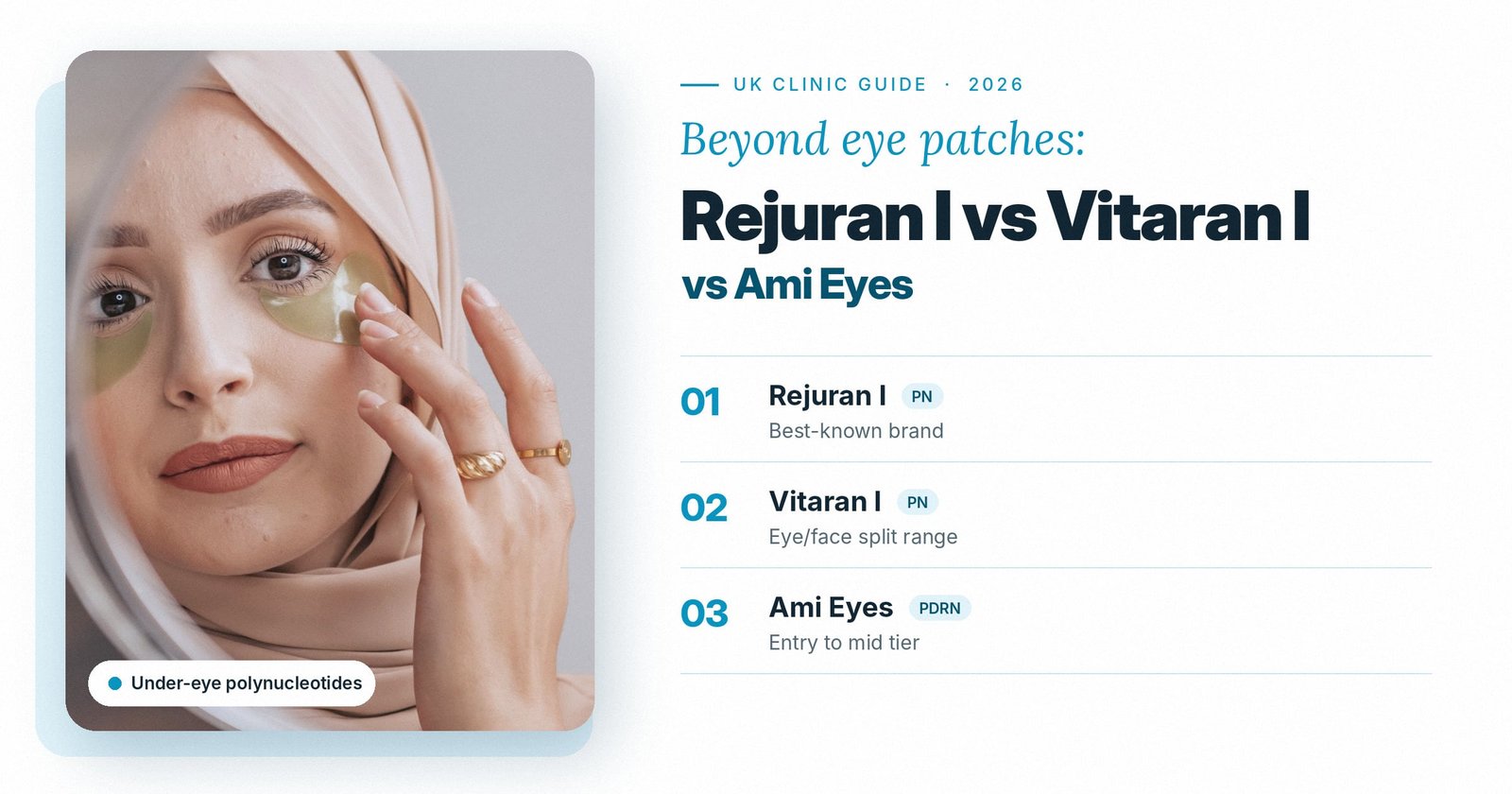
Rejuran I vs Vitaran I is a question more UK practitioners are asking as Korean eye polynucleotides arrive in the market. Add Ami Eyes, a PDRN-based eye booster, and you have three products built for the same delicate area, each with a different brand position and price point.
This guide covers Rejuran I vs Vitaran I at brand level, with Ami Eyes as a third option. For the broader question of which skin booster to use under the eyes, see our best under eye skin booster guide.
Quick answer on Rejuran I vs Vitaran I: All three use salmon-derived DNA and are designed for the periorbital area. Rejuran I has the strongest brand recognition. Vitaran I belongs to a range split cleanly into eye and face products, which makes menu-building simple. Ami Eyes is a PDRN-based option that suits an entry-level or mid-tier eye treatment. Choose by patient demand, price tier and training. Shop Rejuran I, Vitaran I and Ami Eyes in our skin boosters range
Rejuran I vs Vitaran I vs Ami Eyes at a Glance
| Rejuran I | Vitaran I | Ami Eyes | |
|---|---|---|---|
| Manufacturer | PharmaResearch (South Korea) | HP Cell (South Korea) | — |
| Active ingredient | Polynucleotides (PN) | Polynucleotides (PN) | PDRN |
| DNA source | Salmon | Salmon | Salmon |
| Made for | Eye area; also face and neck | Eye area | Eye area and tear trough |
| Formulation | More fluid version of Rejuran Healer | Eye-specific formulation | Eye-specific formulation |
| Brand position | Premium, high recognition | Premium, clear eye/face split | Entry to mid tier |
PN vs PDRN: Does It Matter?
Polynucleotides (PN) and PDRN (polydeoxyribonucleotide) are both purified DNA fragments, usually from salmon. The terms are often used loosely, but PN products generally contain longer DNA chains, while PDRN refers to shorter fragments. Both are used to stimulate fibroblasts and support tissue repair.
In practice, the brand’s own formulation, concentration and clinical data matter more than the label. Always check the IFU for the product you stock. For the mechanism in detail, see What Are Polynucleotides and How Do They Work?
Rejuran I
Rejuran I is PharmaResearch’s eye-area product, a more fluid version of Rejuran Healer that spreads easily in thin tissue. It comes in a 1ml syringe and can be placed with small intradermal injections or a cannula.
A typical approach is sessions every 2–4 weeks for the first 2–3 months, then maintenance around every 6 months. Check the IFU for the exact protocol.
Best for: clinics whose patients ask for Rejuran by name, and premium under-eye services.
Vitaran I
Vitaran I is HP Cell’s eye product, part of a range that separates eye and face treatments. That split makes it easy to explain to patients and build a clear “under-eye rejuvenation” service around it. If you’re also comparing Vitaran’s face product, see Plinest vs Vitaran. In the Rejuran I vs Vitaran I decision, this clean split is Vitaran’s main advantage.
Best for: clinics building a signature under-eye treatment with a simple, separate eye product.
Ami Eyes
Ami Eyes is a PDRN-based skin booster derived from salmon DNA, formulated for the periorbital area. It targets dark circles, fine lines, crepiness and mild hollowing through tissue regeneration rather than filling.
Best for: an entry-level or mid-tier eye treatment, or patients new to polynucleotides.
Rejuran I vs Vitaran I: Which Patient, Which Product?
| Patient | Suggested choice |
|---|---|
| Asks for Rejuran by name | Rejuran I |
| Wants a premium signature eye treatment | Rejuran I or Vitaran I |
| First-time eye treatment, budget-conscious | Ami Eyes |
| Also having full-face polynucleotides | Match the brand of the face product |
| True tear-trough hollow or fat pad protrusion | None alone: assess for filler or surgical referral |
Rejuran I vs Vitaran I: Protocol and Technique
On protocol, Rejuran I vs Vitaran I differ less than you might expect. All three follow the same broad approach:
- Course: typically 3–4 sessions, 2–4 weeks apart
- Maintenance: around every 6 months
- Technique: superficial placement with a fine needle or a cannula
- Downtime: small bumps and possible bruising, usually settling within a few days
The eye area needs extra care with depth and volume. See our guides to cannula vs needle and dermal filler cannula sizes for choosing the right tool and gauge.
Building a Tiered Eye Menu
You don’t have to choose Rejuran I vs Vitaran I outright. Stocking two eye products at different tiers works well for many clinics:
- Premium: Rejuran I, Vitaran I or Plinest Eye
- Entry: Ami Eyes
Sell the full course up front, take consistent before and after photos, and book maintenance before the patient leaves.
Frequently Asked Questions
Is Rejuran I better than Vitaran I? In the Rejuran I vs Vitaran I comparison, neither has proven superiority in independent head-to-head trials. Rejuran I has stronger brand recognition; Vitaran I is part of a clearly split eye and face range.
What is the difference between Ami Eyes and Rejuran I? Ami Eyes is a PDRN-based eye booster, while Rejuran I is a polynucleotide (PN) eye product from PharmaResearch. Both use salmon DNA and target the periorbital area.
Are these products safe for under the eyes? All three are formulated for the periorbital area. Use them only as directed by the IFU, with appropriate training, and source them from a verified supplier. See how to verify a legitimate supplier.
How many sessions do under-eye polynucleotides need? Usually 3–4 sessions, 2–4 weeks apart, followed by maintenance around every 6 months.
Why use polynucleotides under the eyes instead of filler? Polynucleotides improve thin, crepey skin without adding bulk, which lowers the risk of puffiness. See Why Are Polynucleotides Used Under Eyes?
Genuine, traceable stock with next-day UK delivery or Click & Collect from our Birmingham store: browse all skin boosters.
References: Rejuran I product information · Ami Eyes overview (Pabau)
This article is intended for qualified aesthetic practitioners. Always follow the manufacturer’s instructions for use, complete appropriate training, and comply with UK regulations before treating patients.