
What Is the Best Skin Booster for Under Eyes?
For most clinics, a dedicated polynucleotide formulation such as Vitaran Eyes is the safest and best-supported starting point for the under-eye area. The right pick still depends on the client’s main concern: crepey texture, dark circles, or thin, dehydrated skin. There’s no single universal answer here, only a best fit for the presentation in front of you.
Why the Under-Eye Area Needs a Different Approach
Skin under the eyes is roughly a third the thickness of skin on the rest of the face, with very little underlying fat and a dense network of small blood vessels sitting close to the surface. Products formulated for the cheeks or forehead can look lumpy, or even faintly blue, if used here at full strength.
That’s why manufacturers now produce dedicated eye-specific formulations, lower in volume and adjusted in concentration, rather than expecting practitioners to simply dilute a standard product. Choosing the right skin booster starts with matching the formulation to the area, not just the active ingredient inside it.
Can Profhilo Be Used Under the Eyes?
Profhilo isn’t licensed or marketed specifically for the periorbital area, and manufacturer guidance generally steers practitioners toward the cheek and mid-face for standard injection point placement. Some experienced injectors use it close to, but not directly in, the under-eye hollow.
Where a clinic wants a hyaluronic acid hydration boost near the eyes, purpose-built products aimed at that exact zone are the safer and better-supported choice. Off-label use of a general-purpose product in such a delicate area should sit with practitioner training and judgement, not general advice.
Are Polynucleotides Good for Under Eyes?
Yes, and this is one of the strongest use cases for PN in the current UK market. Formulations such as Vitaran Eyes are built specifically for this zone, at lower PDRN concentration and smaller pack sizes designed for precise, minimal-volume injection into thin tissue.
Because polynucleotides work by stimulating collagen and elastin rather than adding hydration bulk, they tend to improve crepiness and fine lines under the eyes without the puffy look that can come from over-hydrating already thin skin. That mechanism makes them a natural fit for this particular area.
Profhilo vs Polynucleotides for Under-Eye Skin
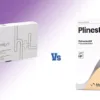
Profhilo’s strength is broad-area hydration and lift, which makes it a better fit for the cheeks and lower face than the eye itself. Its diffusion pattern is designed for wide tissue coverage rather than the pinpoint placement the periorbital area actually demands.
PN products built for the eye area, meanwhile, address the specific problems clients raise most often: dark circles, crepey texture and fine lines. Most UK clinics offering under-eye rejuvenation now lead with a dedicated PN eye product rather than adapting a general skin booster to fit.
Best Options for Thin, Fragile Under-Eye Skin
Thin, fragile skin responds best to lower-volume, lower-concentration formulations injected superficially with a fine needle, which minimises trauma to an already delicate area. Products like Vitaran Eyes are formulated at concentrations designed to sit comfortably at this depth.
- Choose products explicitly indicated for the periorbital area, not general skin boosters used off-label
- Favour smaller pack sizes designed for single- or double-eye treatment over diluting a full-face product
- Confirm the manufacturer’s recommended needle gauge and injection depth before treating this zone
Do Skin Boosters Help With Dark Circles and Eye Bags?
They can help with the pigmentation-adjacent dullness and crepey texture that make dark circles look worse, largely by improving skin quality and thickness over the course of treatment. What they can’t do is remove a true tear-trough hollow or genuine fat pad protrusion; those need volume correction or, in some cases, a surgical solution.
Setting client expectations before the first session matters here more than almost anywhere else on the face. A polynucleotide course will brighten and firm the area gradually, but a client expecting a filler-level change after one visit will be disappointed by week two.
How Long Do Under-Eye Skin Boosters Last?
Dedicated PN eye products such as Vitaran Eyes commonly hold results for six to nine months, broadly in line with full-face polynucleotide treatment, though individual response varies with skin condition and lifestyle factors like sun exposure and sleep.
Profhilo-style hyaluronic acid hydration in adjacent areas tends to sit closer to six months. Clients on a maintenance plan usually return before results fully fade rather than waiting until the effect has disappeared entirely.
How Many Sessions Are Needed?
Most under-eye PN protocols run two to three sessions spaced two to four weeks apart, matching the standard polynucleotide course length used elsewhere on the face. Visible change usually starts to show from the second session onward.
A single session under the eye rarely gives a fair picture of the treatment, so it’s worth setting that expectation clearly during consultation. Clients who commit to the full course consistently report better satisfaction than those who stop after one visit.
Are Under-Eye Skin Boosters Safe?
When delivered by a trained practitioner using CE-marked, traceable stock, these treatments have a strong safety record. Bruising is the most commonly reported side effect, with swelling far less frequent than seen with volumising fillers used in the same area.
The bigger safety question sits upstream of the injection itself: sourcing. Counterfeit or diverted stock carries real risk in the eye area given how close it sits to delicate vasculature, so verified wholesale sourcing matters more here than almost anywhere else on the face.
Frequently Asked Questions
A few questions come up in nearly every under-eye consultation, so it’s worth having short, confident answers ready before the client asks.
It’s not licensed for direct periorbital placement, so most practitioners use dedicated eye-specific PN products in this zone instead.
Yes, formulations like Vitaran Eyes are built specifically for this thin, delicate area and address crepiness and fine lines through tissue repair.
A dedicated, lower-volume polynucleotide product formulated for the periorbital area, rather than a general-purpose skin booster used off-label.
Typically six to nine months for dedicated PN eye products, depending on the individual and lifestyle factors.
Most protocols call for two to three sessions, spaced two to four weeks apart.
Yes, particularly polynucleotide formulations, which stimulate collagen and elastin to gradually reduce crepiness and surface lines.
Yes, when administered by a trained injector using genuine, traceable stock, with bruising the main reported side effect.